
Learning to Work

Another updated missive from the Wayback Machine.
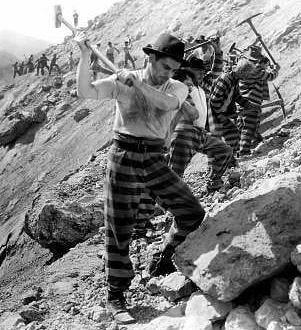
“Give a man a fish and you feed him for a day; teach a man to fish and you feed him for a lifetime.”
It’s graduation time, which means another cohort of hopeful young people will soon march out of the colleges and universities of America ready to tilt at the windmills of an increasingly uncertain future. Keep your fingers crossed for these kids, because they’re walking into some serious headwinds. Not to go all Big-Picture on you here, but I’m not sure the world has been up for grabs like this — in the realms of economics, domestic politics, geopolitics, and technology — since the late 1930s.
That’s not a period of history any sane person wants to repeat.
If this was ten years ago, a fair number of those young graduates would be heading to Hollywood in pursuit of a career — but that was then. Thanks to the streaming bust and subsequent corporate consolidation, the Covid shutdown, the WGA/SAG strike, production migrating offshore, and the looming encroachment of AI, the workforce above and below the line has thinned considerably in the past few years. Although things seem to be picking up a bit lately, the halcyon days when every sound stage in LA was booked solid seem unlikely to return anytime soon, if ever. Still, every system depends on regular infusions of fresh blood, so I’ve no doubt that a few newly-minted grads will soon be huddling in the shadow of that big white '“Hollywood” sign high in the parched hills overlooking LA.
Maybe this post — a version of which ran on the old BS&T blog back in 2014 — still applies.
*********************************************
The importance of persistence on the part of those hoping to forge a career in the film and television industry can’t be overstated, but there’s something else every newbie knocking on the doors of Hollywood needs to know to make their cinematic dreams come true.
No, not the four-digit numerical code that opens the security gate guarding Cindy Crawford’s secluded beachside home (which I learned — then promptly forgot — while working on an infomercial with the then-supermodel at her home in Malibu), but something much more basic and infinitely more useful: How to work.

Ah, Cindy, I hardly knew you … in fact, I didn’t know you at all.
You’d be surprised how many newbies arrive on the shores of Hollywood burdened with the assumption that by dint of being young and earnest, some mysteriously divine process will bless them with success — and after a short period of “paying their dues,” good things will naturally start to happen.
It doesn’t work that way — and the key word here is “work,” because in order to bring any of your Hollywood dreams to life, you’re going to have to work very hard indeed. If you don’t know how to work — really work — you’ve got a problem. It takes a lot more than simply putting your head down and grunting/sweating until someone tells you to stop.
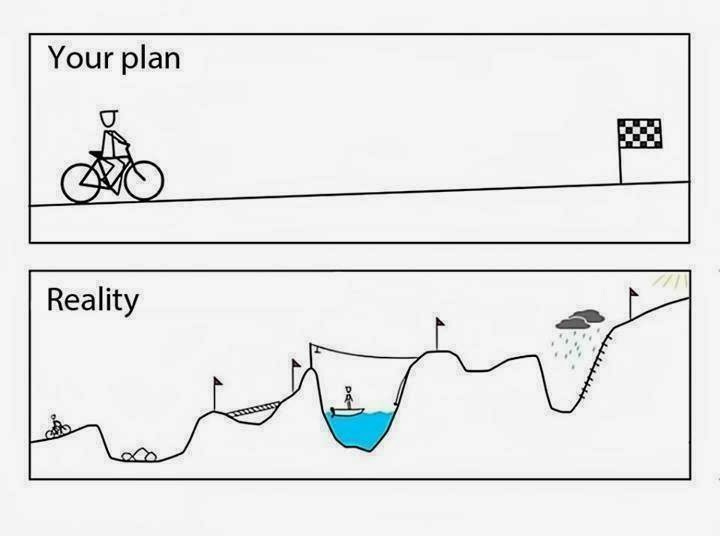
I too was once a clueless young fool who didn’t know how to work. Despite growing up on a small farm where doing chores of the sort that would horrify your average urban or suburban film school graduate was a part of everyday life, I hadn’t really learned how to work.
Truth be told, I was a lazy slug who had to be prodded with the pitchfork of fear or the lure of a reward to do any sort of work, and even then I’d do just enough to get by. Truly unpleasant assignments — like spending my entire Spring Break shoveling mountains of pig shit out of our barn, or struggling to write a hopelessly lame paper on D.H. Lawrence in college for some god-awful Lit class I never should have taken in the first place — were performed grudgingly at best.*
I just didn’t like to work.
Since nothing in school taught me to embrace the concept of hard work, I remained an indolent lout through my post-collegiate years while editing my thesis film — which I turned in nearly three years after the rest of my graduating class had sailed off into the real world — and scraping out a minimum-wage living behind the counter of a local pizza parlor. Having yet to learn how to do a good job or take pride in my work no matter the circumstances: I was just skating through. After getting fired from the pizza job (a totally justified termination, I might add), then — finally —completing that thesis film, I stood before the world a 25 year old unemployed young man with no useful or salable skills whatsoever.
By comparison, Orson Welles was 25 when this legendary film “Citizen Kane” hit the theaters … but Orson Welles knew how to work, and I didn’t.**
Being flat broke, I was neither financially nor emotionally prepared to mount an assault on Hollywood, so I answered a want add in the local newspaper and landed a job behind the counter of a mom-and-pop deli in the hills north of Santa Cruz. There was just one Erik's Deli at the time, but Erik had big plans that did not include a lazy, unmotivated employee who was accusomed to doing a half-assed job.
Erik and I got off to a rough start. He was a burly, intense man who made it clear that certain standards would be maintained in his deli come hell or high water -- and I was to meet those standards. Behind this challenge lurked the unspoken threat that it was his way or the highway. Given my innately lazy nature and dismal history with any kind of work, it seemed unlikely I’d last more than a couple of weeks.
Much to my surprise, those two weeks passed without getting the boot, but I wasn’t having much fun. Having deduced that I was a lazy fuck-up, Erik busted my chops with metronomic regularity. I didn’t much like that, and at a certain point my resentment at his critical comments bubbled over into a powerful desire to prove him wrong.
I didn’t realize it then, but I was responding to his challenge. I began paying attention at work in a way I never had before, taking the job seriously and trying hard to do it right for the very first time. It took a while for me to shape up, at which point Erik assigned me to the crew about to open a brand new deli, a much bigger facility at a busy outdoor shopping center. Business would be fast and furious there, and he seemed to think I could handle it.
The chops-busting continued, of course. Erik was relentless in his determination that the new deli succeed and prosper. The service would be friendly and efficient, the sandwiches made with care, and the store kept clean at all times. If this all sounds completely obvious, you’re right — it’s Retail Food Industry 101 — but my previous stint at the pizza parlor taught me every bad work habit you can imagine, along with a few that you can’t.*** Negative training like that doesn’t turn around overnight.
There were plenty of ups and downs over the next year. Erik dropped in for frequent unannounced visits, and during one of those, found a marijuana seed on the kitchen floor. He made a point of bringing that up at an employee meeting, turning to fix me with his laser-beam glare. The irony was that of the entire night shift crew, I was the only one who didn’t smoke dope at work, which everybody knew but Erik.
I kept my cool. By then I’d learned to be responsible, to work with a crew as a team, and the importance of going above and beyond what was strictly required. With my sights set on Hollywood, I was happy to let the rest of the crew jockey for the soon-to-be-open assistant manager job.
When I was ready to take my shot, I gave a full month’s notice at the deli, then kept working hard right up through to the end. A few days after I’d clocked out for the last time, Erik called me into the main office. I had no idea what to expect, but there I found a very different guy. He was all smiles now, the hard edge gone. Thanking me for all my hard work — and for not slacking off coming down the stretch — he wished me luck in Hollywood, then handed me a check for a full month’s severance pay, something he was under no obligation to do.
I was floored, but what I didn’t realize then was that the lessons I’d learned in how to work over the previous fourteen months would prove far more valuable to my future than a check for five hundred dollars.
A few weeks later I threw a leg over my motorcycle and headed down U.S. Route 101 to Los Angeles with a pocket full of hope and enough in my wallet to last a few months.
Once in Hollywood, my new attitude towards work paid off. I hit the ground ready to go, and after a couple of months landed my first job as an unpaid production assistant on a very low budget feature, then parlayed that into a paid assistant editing gig. Once that job ended, I got another feature as a PA — paid, this time — and within a year worked my first feature as a grip, after which I eventually moved to set lighting.
I was on my way, but looking back now, I’m not sure any of that would have — or could have — happened if not for the hard lessons I’d learned about to how to work behind the counter of the deli.
This isn’t to paint my fence as some wonderful Hollywood success. I managed to survive the ebb and flow of the film industry for the better part of four decades, but lifting heavy objects for a living is a long way from the heady creative environment of the writing rooms and director’s chairs of Hollywood. I was never more than a tiny cog in the vast gears of the Industry Machine, but the principle I’m talking about here holds, because nobody — above or below the line — can hope to achieve their Hollywood dreams without a lot of hard work.
It’s something everybody has to learn sooner or later -- and in Hollywood, the sooner, the better. So to all you cap-and-gown grads about to embark on the journey of life beyond school, work hard, live long, and prosper. I wish you the best of luck.
You’re gonna need it.
* It’s a good thing I went to one of those totally forgiving pass/no record schools, or else I’d never have bagged any kind of college credential. Not that a degree in “Aesthetic Studies” was worth a dime in the real world, of course, but that’s a tale for another time.
** He was also an astonishingly talented, utterly brilliant, and boundlessly ambitious genius. Me? Not so much.
*** Remember these words, people: don’t ever — and I mean EVER — piss off the kids behind the counter of any food establishment. Trust me on this.
Well told, again. I've long said that everyone should work a foodservice job at some point in their lives for an assortment of reasons-- they would certainly respect those folks more, tip higher, and per your last comment, oh yeah. I worked my way through college at Cornell Hotel School--- as waitstaff, bartender and kitchen crew... all the wealthy classmates would come in and I'd have to wait on them. You were definitely lucky to have such a mentor. He saw the potential. ~J
Great Piece, Michael. Sadly, the dream is gone, Hollywood's gone (for most). Good money is pretty much gone, but the luck people like you and I (I made a lot of $$ in Hollywood in the 80's) had, is cherished every second... so not gone. :) We should be extra kind to every young person who is going to have to deal with this new, unfortunate, cruel and deliberate reality ~